Hey there! As a supplier of checkered aluminum coil, I often get asked about what formability means in the context of our product. So, let’s dive right in and break it down. Checkered Aluminum Coil
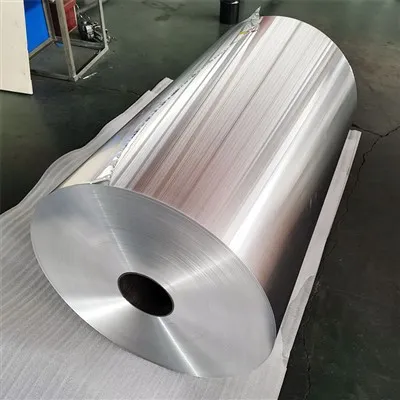
Formability, in simple terms, is how easily a material can be shaped or formed into different configurations without cracking, breaking, or losing its integrity. When it comes to checkered aluminum coil, formability is a super important factor because it determines how flexible our product is for various applications.
You see, checkered aluminum coil is a great option for lots of projects because it combines the benefits of aluminum – like being light – weight, corrosion – resistant, and having good conductivity – with the added strength and grip provided by the checker pattern. But all these benefits don’t mean much if we can’t form it into the shapes our customers need.
First off, the chemical composition of the aluminum alloy used in the checkered coil plays a huge role in its formability. Most of the checkered aluminum coils we supply are made from 3000 – series or 5000 – series aluminum alloys. The 3000 – series, which has manganese as the main alloying element, is known for its decent formability and good corrosion resistance. It’s relatively soft and malleable, making it easier to bend, roll, and stretch. We’ve had customers use this alloy to make everything from decorative panels to storage containers, and they’ve been able to form it into all sorts of curves and angles with not too much trouble.
On the other hand, the 5000 – series alloys, with magnesium as the main alloying element, are a bit stronger and more resistant to fatigue. They’re still quite formable, but they require a bit more force when it comes to shaping. However, the extra strength they offer makes them a top choice for applications where the formed parts will be under more stress, like in the construction of trucks or boats.
Another aspect that impacts formability is the thickness of the checkered aluminum coil. Thinner coils are generally more formable than thicker ones. With thinner coils, you can make more complex bends and tighter curves. For example, if you need to create a spiral – shaped trim for an architectural project, a thinner checkered aluminum coil will be much more suitable. It can be easily bent around a mandrel or shaped using a brake press.
But thicker coils also have their place. They’re stronger and can withstand more abuse. If you’re making heavy – duty equipment covers or structural components, a thicker checkered aluminum coil is the way to go. Of course, forming thicker coils requires more powerful tools and machinery, such as large hydraulic presses or industrial roll formers.
The surface condition of the checkered aluminum coil is also a big deal when it comes to formability. A smooth and clean surface allows the material to flow more freely during the forming process. Any scratches, dents, or debris on the surface can act as stress concentrators, increasing the risk of cracking or tearing. That’s why we make sure our checkered aluminum coils are carefully inspected and cleaned before they’re shipped out. We want our customers to have a hassle – free forming experience.
Now, let’s talk about the different forming methods that are commonly used with checkered aluminum coil. One of the most popular methods is bending. Bending can be done in several ways, including air bending, bottom bending, and coining. Air bending is the simplest and most common method. It involves using a punch and a die to bend the coil to a specific angle. The advantage of air bending is that it’s relatively easy to set up and can be used to make a wide range of angles.
Bottom bending, on the other hand, results in a more precise bend. In this method, the coil is forced completely into the die, which gives a more accurate angle. Coining is the most precise bending method, but it requires a lot of force and can be more expensive. It’s usually used when very tight tolerances are required.
Roll forming is another important forming method. In roll forming, the checkered aluminum coil passes through a series of rollers that gradually shape it into the desired cross – section. This method is great for creating long, continuous shapes, such as channels or tubes. It’s a highly efficient process that can produce large quantities of formed parts quickly.
Stamping is also used for checkered aluminum coil, especially when complex shapes or patterns need to be created. In stamping, a die is pressed into the coil to cut or shape it. This method allows for the production of parts with high precision and repeatability.
So, why is all this talk about formability important for you as a potential buyer? Well, if you’re planning a project that involves using checkered aluminum coil, understanding its formability will help you choose the right alloy, thickness, and forming method. This means you’ll be able to get the best out of our product and ensure that your project turns out just the way you want it.
Say you’re an architect working on a modern building. You might want to use checkered aluminum coil for the exterior cladding. Knowing the formability of the coil will help you decide whether to go for a 3000 – series alloy for easy bending to create unique curves, or a 5000 – series alloy if you need more strength for a vertical installation.
If you’re in the automotive industry, you could be looking to use checkered aluminum coil for interior trim or some structural components. Understanding its formability will let you select the right thickness and forming method to meet the high – quality standards of the automotive sector.
As a supplier, we’re always here to help you with any questions you might have about formability. We’ve got a team of experts who can give you detailed advice on which alloy and thickness are best for your specific project, and we can also recommend the most suitable forming methods.
We take pride in the quality of our checkered aluminum coil, and we know that its formability is one of its key selling points. Whether you’re a small – scale craftsman or a large – scale industrial manufacturer, we’ve got the right product for you.

So, if you’re interested in purchasing checkered aluminum coil or have any questions about formability and how it can work for your project, don’t hesitate to reach out. We’re excited to start a conversation with you and help you bring your ideas to life. Let’s work together to make your project a huge success!
Checkered Aluminum Coil References:
- Metals Handbook: Properties and Selection – Nonferrous Alloys and Pure Metals, Volume 2
- Aluminum Association: Technical Manuals on Aluminum Alloys and Their Applications
Henan Yongsheng Aluminum Industry Co., Ltd.
We are one of the most reliable checkered aluminum coil manufacturers and suppliers in China. With abundant experience, we warmly welcome you to buy high-grade checkered aluminum coil for sale here from our factory. All custom made products are with high quality and competitive price.
Address: Gongyi City Industrial Cluster District, Huiguo Town, Gongyi City, Henan Province
E-mail: eric@ysaluminum.cn
WebSite: https://www.ysaluminummill.com/
