Hey there, if you’re deep in the construction, mining, agriculture, or even land-clearing game, you’ve probably asked yourself (or me, as your go-to crawler tractor supplier) at some point: “What’s the actual weight of a crawler tractor?” It’s not just a random number to pad a spec sheet—this weight impacts literally everything about how your machine performs, from traction to ground pressure to whether it can even get where you need it to work. Let’s break this down like we’re chatting over a coffee (no stuffy jargon, promise) and ground it in real-world stuff I see every day from customers calling to order or trouble-shoot a job. Crawler Tractor
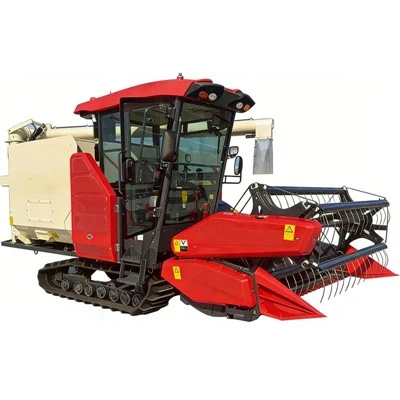
First off, let’s get one thing straight: crawler tractors aren’t all the same. If you’re picturing a tiny, old Case 310 that a farmer uses to move hay bales, that’s way lighter than the 100-tonne (wait, yeah, I said tonne—we use metric here because most of my international customers do, but I’ll throw in pounds too for my US crew) behemoth we sell for open-pit mining. The weight depends on three big things: what it’s built for, the attachments you bolt on, and any extra gear someone might add like a cab with heat/AC or a winch for pulling heavy stuff.
Let’s start with the small stuff first, because that’s what a lot of folks don’t think about. The compact utility crawler tractors—you know, the ones for small farms, residential land clearing, or tight construction sites where a big bulldozer can’t turn around. These are usually the ones with narrow tracks, smaller engines (like 20 to 80 horsepower), and they weigh between 1,800 lbs and 8,000 lbs, roughly. Wait, that’s a big range, right? A 25 hp Yanmar compact crawler I supplied last month to a guy in Ohio who uses it to grade his 5-acre pasture is only like 1,950 lbs—super light enough to haul behind a pickup truck on a flatbed, no special permits. But if you get that same compact model with a 6-way dozer blade, a rear stump grinder, and a cab for winter work? You’re pushing 7,800 lbs, almost 8k. That’s a difference of nearly 6k lbs just from add-ons—something I always hammer home to new customers who call and say “I just need a crawler” without listing the jobs they’ll do.
Next up are the mid-range crawler tractors, the workhorses for general construction, small to medium mining, and large-scale agriculture (think pulling heavy planters or tillers). These are the ones with 100 to 300 horsepower, tracks that are wider for better traction, and options for dozers, scrapers, or log loaders. Their weight? Between 18,000 lbs and 45,000 lbs. Last quarter, I supplied a Case 1650M mid-range dozer to a road construction crew in Texas that needed to grade 10 miles of rural highway—its base weight was 38,200 lbs, and they added a root rake for clearing brush alongside the road and a winch to pull fallen trees off the right of way, bringing it up to 42,700 lbs. They told me that weight was perfect because it kept the tracks from slipping on the loose gravel, but it was light enough to be transported on a standard lowboy trailer without needing an oversize load permit (another thing I always mention—permit rules change with weight, so it’s non-negotiable to factor in total operating weight, not just base).
Then we get to the heavy hitters, the large crawler tractors built for big mining, large-scale earthmoving, and heavy industrial jobs. These are the ones that look like they could crush a small car under their tracks. The base models here start at 80,000 lbs and go all the way up to 220,000 lbs for the biggest ones, like the Caterpillar D11 or Liebherr PR 776. Wait, I once talked to a mining company in Chile that ordered a Liebherr PR 776 from me last year—their total operating weight with a large dozer blade, tire chains (for traction on icy mine haul roads), and a backup generator kit was 212,000 lbs. That’s over 100 tons, for context. The reason these are so heavy? They need all that weight to create enough traction to push 40 cubic yards of rock or dirt at once. If a big bulldozer was light, it’d spin its tracks like a kid on slip ‘n slide instead of moving material. That’s why weight isn’t a fluff factor—it’s a performance factor.
Now, here’s something most people don’t realize: the weight of the tracks themselves makes a huge difference, too. Crawler tractors use continuous tracks instead of rubber tires, so the track system adds hundreds (or thousands) of pounds to the total. For a compact model, rubber tracks add like 200 to 500 lbs, while steel tracks on heavy models add 5,000 to 10,000 lbs. And not just that—track width and tension matter. Wider tracks spread the tractor’s weight over more ground, lowering ground pressure so it doesn’t sink into soft mud or sand, which is why farmers in swampy areas or construction crews working on wet land go for wider tracks (and sometimes that adds an extra 1,000 lbs to the total weight).
I get a ton of calls every week from customers who ask, “Can I use a mid-range crawler tractor for my 100-acre farm?” and the first thing I check is their ground type. If their farm has dry, hard soil, a 25k lbs mid-range is fine—no sinking, great traction. But if it’s a farm in the Mississippi Delta with super soft, wet clay? That same mid-range with narrow tracks would sink 2 feet into the mud, because its ground pressure is too high. So they might need a compact tractor with extra-wide tracks, even if that means a tiny bit more horsepower, because lower ground pressure from adjusted weight (wait, no—actually spreading the same weight over more area lowers pressure) is key. I don’t just sell the biggest tractor I have for every job— I send customers home with the right weight for their specific work, because I’ve seen what happens when someone buys a tractor that’s too light or too heavy for their site.
Another common question I get: “Does the weight affect fuel efficiency?” Short answer? Yes, but not how you’d think. A heavier tractor uses more fuel to move its own weight, but if that weight means it’s not slipping tracks and actually moving material efficiently, it’s way better than a lighter tractor that’s spinning its tracks all day and getting nowhere. For example, if you’re pushing dirt in loose sand, a 30k lbs mid-range that’s gripping well might move 20% more dirt per gallon than a 20k lbs compact that’s spinning its tracks half the time. So it’s a tradeoff, but not a linear one—you can’t just pick the lightest tractor to save fuel.
Wait, let’s talk about some numbers I pull straight from my order books to make this real. Last month, I had three customers:
- A small landscaping company in Florida: ordered a 28 hp compact crawler, base weight 1,920 lbs, added a 60-inch dozer blade (310 lbs) and a front rotary cutter (220 lbs), total weight 2,450 lbs. Job: clearing residential lots, grading driveways. Perfect weight for their tiny sites, no permit needed for transport.
- A mineral exploration crew in Nevada: ordered a 220 hp mid-range dozer, base weight 39,100 lbs, added a 12-foot dozer blade (1,200 lbs) and a rock ripper (1,800 lbs), total weight 42,100 lbs. Transported on a lowboy with a state oversize permit (since it’s over 40k lbs in Nevada), which cost them a few hundred bucks but saved them days of work from a tractor that’d slip on the rocky Nevada soil.
- A copper mine in Peru: ordered a large crawler tractor, base weight 198,500 lbs, added a 20-foot dozer blade (4,200 lbs) and a cabin upgrade with heavy-duty suspension (800 lbs), total weight 203,500 lbs. Required an international oversize transport permit, but their mining site is rocky and steep, so that weight is non-negotiable for traction on the hillsides.
I also have to mention something I see way too often: people confusing base weight with operating weight. Base weight is just the tractor itself, no attachments, no fuel, no fluids. Operating weight is what matters 100% of the time because that’s what you’re actually working with. A lot of cheap off-brand tractors will advertise a “low weight” number that’s just base weight, but add fuel and a blade and suddenly it’s way heavier than they said. I never do that—all my listings have both base and operating weight, plus notes on what each weight includes, because I hate when customers get surprised mid-job.
So why does all this matter for you, whether you’re a first-time buyer or a seasoned operator? Let’s wrap it up: the weight of a crawler tractor isn’t a random spec—it’s the foundation of performance. Too light, and you spin tracks, get stuck on soft ground, can’t pull or push the material you need. Too heavy, and you’ll sink, pay more for transport permits, and waste fuel moving extra weight that doesn’t help your job.
If you’re wondering what the right weight is for your specific project—whether it’s clearing land, grading a road, mining, or farm work—hit me up. I don’t do pushy sales, I just ask you a few questions: what’s the job, where’s the site, what attachments do you need, and we’ll figure out the perfect crawler tractor weight (and model) that fits. No guesswork, no hidden numbers, just the right gear to get your job done right.
Wait, before I go, let’s clear up one myth I hear all the time: “Crawler tractors are always heavier than tire tractors.” Not exactly— some mid-range crawlers are around the same weight as large farm tractors, but crawlers have way more traction because their weight is spread over tracks instead of four small tires. So even a crawler that’s the same weight as a tire tractor will outperform it on soft or uneven ground. That’s the whole point of going crawler, right?

If you’re ready to talk specs, compare weights, or just ask more questions about what’s right for you, reach out anytime. No pressure, just real answers from a supplier who’s been in this game for years.
Combine Harvester References:
- Caterpillar Inc. (2023). Crawler Tractor Spec Sheets. Retrieved from manufacturer technical documentation.
- Liebherr Group. (2023). PR Series Crawler Tractor Operating Weights. Retrieved from manufacturer product guides.
- United States Department of Transportation. (2024). Commercial Vehicle Weight and Dimension Regulations. Retrieved from federal motor carrier safety administration resources.
- International Organization for Standardization. (2022). Earth-Moving Machinery – Crawler Tractors – Terminology and Technical Specifications. ISO 7130:2022.
Huzhou Liangyi Agro Machinery Co., Ltd.
As one of the most professional crawler tractor manufacturers and suppliers in China, we have world-leading production equipment and strong manufacturing capabilities. Please rest assured to wholesale advanced crawler tractor from our factory. Contact us for more cheap products.
Address: High-Tech Industrial Zone, Huzhou City, Zhejiang Province, China
E-mail: Liangyi_agro@126.Com
WebSite: https://www.cnliangyi-agro.com/
