As a provider of gas-fired kilns, I often get asked a variety of questions regarding the capabilities of our products. One inquiry that has come up quite frequently is whether a gas-fired kiln can be used for firing ceramic tiles with different patterns. In this blog post, I’ll delve into this topic to provide a comprehensive understanding of how our gas-fired kilns can meet the diverse needs of ceramic tile production. Gas Fired Kiln
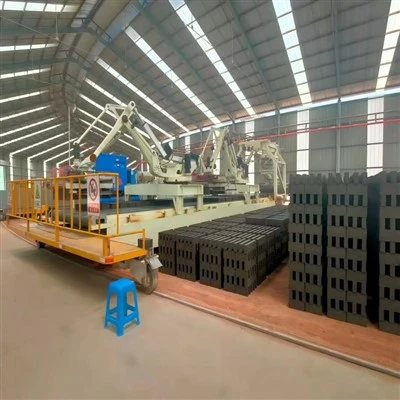
Understanding Gas-Fired Kilns
Gas-fired kilns have been a staple in the ceramic industry for decades. They utilize natural gas or other combustible gases as the primary energy source to generate high temperatures required for firing ceramics. The key advantage of gas-fired kilns lies in their ability to provide a consistent and controllable heat source. This is crucial for achieving the desired physical and chemical properties of ceramic tiles during the firing process.
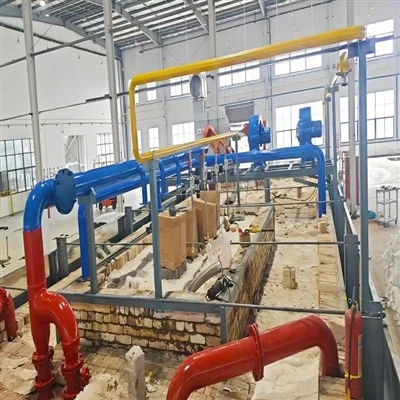
The structure of a typical gas-fired kiln consists of a refractory-lined chamber, burners, a ventilation system, and temperature control mechanisms. The refractory lining insulates the kiln, minimizing heat loss and ensuring efficient energy usage. The burners are strategically placed to distribute heat evenly throughout the kiln chamber. The ventilation system helps to remove combustion by – products and maintain proper oxygen levels within the kiln, while the temperature control mechanisms ensure that the firing cycle is precisely regulated.
Firing Ceramic Tiles with Different Patterns
The process of firing ceramic tiles with different patterns is complex but entirely achievable with a gas-fired kiln. Let’s first understand how patterns are created on ceramic tiles. Patterns can be applied using various methods, such as screen printing, digital printing, and transfer techniques.
Screen printing involves pressing ink or glaze through a fine mesh screen onto the tile surface. The mesh is designed with a specific pattern, allowing the ink or glaze to be deposited only in the desired areas. Digital printing, on the other hand, uses advanced inkjet technology to apply patterns directly onto the tile. This method offers high precision and the ability to create complex and customized designs. Transfer techniques involve printing the pattern onto a special paper, which is then transferred to the tile surface using heat or pressure.
When it comes to firing these patterned tiles, the gas – fired kiln plays a vital role. The firing process aims to transform the raw materials of the tile, such as clay and minerals, into a durable and aesthetically pleasing finished product. During firing, the tile undergoes several stages: drying, bisque firing, and glaze firing.
In the drying stage, the tiles are heated to remove any moisture. This is a crucial step, as moisture can cause the tiles to crack or explode during the subsequent high – temperature firing stages. Gas – fired kilns can be precisely controlled to provide a gentle and consistent heat for the drying process, ensuring uniformity across all tiles, regardless of their pattern.
The bisque firing is the next stage, where the tiles are fired at a relatively high temperature (usually between 900 – 1200°C) to harden the clay and prepare it for glazing. This step also helps to burn off any organic matter in the tile. The even heat distribution provided by gas – fired kilns is essential during bisque firing, as it ensures that all parts of the patterned tile reach the required temperature evenly. Uneven heating could lead to differences in hardness or color across the tile surface.
Finally, the glaze firing is carried out at an even higher temperature (typically between 1000 – 1300°C). The glaze not only gives the tile its color and shine but also provides a protective layer. Different types of glazes have different firing requirements, and gas – fired kilns can be adjusted to meet these specific needs. For patterned tiles, the glaze firing process must be carefully controlled to ensure that the pattern remains intact and that the glaze adheres properly to the tile surface.
Advantages of Using Gas – Fired Kilns for Patterned Tiles
One of the significant advantages of using gas – fired kilns for firing ceramic tiles with different patterns is the cost – effectiveness. Natural gas is generally more affordable than electricity, making gas – fired kilns a more economical option for large – scale ceramic tile production. Additionally, gas – fired kilns can achieve high temperatures quickly, reducing the overall firing time and increasing production efficiency.
Another advantage is the ability to control the atmosphere within the kiln. Different types of patterns and glazes may require specific atmospheric conditions during firing. For example, some glazes may develop unique colors or effects in a reducing atmosphere (low oxygen), while others may require an oxidizing atmosphere (high oxygen). Gas – fired kilns can be easily adjusted to create the desired atmosphere, allowing for a wider range of design possibilities.
The flexibility in size and capacity is also a benefit. Gas – fired kilns can be customized to meet the specific production needs of ceramic tile manufacturers. Whether you are a small – scale artisanal producer or a large industrial plant, there is a gas – fired kiln solution that can accommodate your production volume and tile size requirements.
Challenges and Solutions
While gas – fired kilns offer many advantages for firing patterned ceramic tiles, there are also some challenges that need to be addressed. One such challenge is the potential for thermal shock. Thermal shock occurs when the tile experiences a rapid change in temperature, which can cause cracking or warping. This is particularly critical for patterned tiles, as any damage to the tile surface can affect the integrity of the pattern.
To mitigate the risk of thermal shock, our gas – fired kilns are equipped with advanced temperature control systems. These systems allow for a gradual increase and decrease in temperature during the firing cycle, minimizing the sudden temperature changes that could lead to thermal shock.
Another challenge is the presence of dust and debris in the kiln. Dust particles can settle on the patterned tiles during firing, causing defects or blemishes. To address this issue, our kilns are designed with efficient ventilation systems. These systems continuously remove dust and combustion by – products from the kiln chamber, ensuring a clean firing environment and high – quality finished tiles.
Conclusion
In conclusion, a gas – fired kiln is an excellent choice for firing ceramic tiles with different patterns. The consistent and controllable heat source, cost – effectiveness, ability to control the firing atmosphere, and flexibility in size and capacity make gas – fired kilns well – suited for the diverse needs of the ceramic tile industry. Whether you are producing simple geometric patterns or intricate works of art on ceramic tiles, our gas – fired kilns can provide the reliable performance you need.
Brick Tunnel Kiln If you are in the business of ceramic tile production and are looking for a high – quality gas – fired kiln, I encourage you to reach out to me to discuss your specific requirements. We can work together to find the best solution for your production needs and help you create stunning ceramic tiles with unique patterns.
References
- "Ceramics Manufacturing Technology" by N. K. Jha.
- "Firing Techniques in Ceramic Production" by M. S. Bhatt.
- Industry – specific research reports on gas – fired kilns and ceramic tile production.
Henan Yaxin Kiln Co., Ltd.
Henan Yaxin Kiln Co., Ltd. is one of the most professional gas fired kiln manufacturers and suppliers in China. With abundant experience, we warmly welcome you to buy high quality gas fired kiln with the latest design from our factory. Good service and punctual delivery are available.
Address: Jixian Industrial Zone, Shangqiu City, Henan Province
E-mail: 1543563178@qq.com
WebSite: https://www.hnyxkiln.com/
