If you’ve ever run a finger over the soft, stretchy waistband of a well-loved pair of leggings, or felt the give of a high-performance swim cap that fits like a second skin, you’ve held rubber covered yarn (RCY) in its finished form. As someone who’s spent the last 12 years sourcing, testing, and supplying RCY to apparel, medical, and industrial textile brands across North America and Europe, I get asked one question more than any other—often by product designers, quality control teams, and even small-batch apparel founders who are new to working with this material: “What is the air permeability of rubber covered yarn, and does it matter for my application?” Rubber Covered Yarn
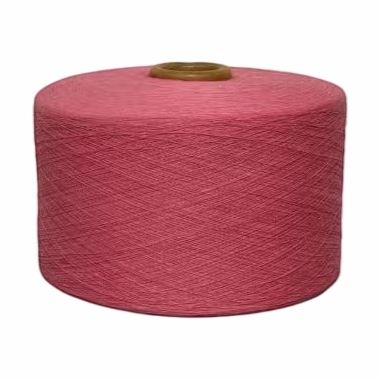
For too long, RCY has been misunderstood as a “sealed” or non-breathable material, a legacy of early 20th century rubber formulations that were thick, stiff, and prone to trapping moisture and heat. Over the past decade, though, advances in polymer chemistry, covering techniques, and quality testing have transformed this material entirely. Today’s high-performance RCY is a balance of stretch, durability, and breathability that makes it suitable for everything from athletic wear to surgical compression bandages, and air permeability is one of the core metrics that determines how it performs in each use case. Let’s break this down, cut through the jargon, and explain what air permeability means for RCY, how we measure it, and what you need to know as a manufacturer or designer working with this yarn.
First, let’s start with a basic definition for anyone who’s not a textile chemist: air permeability is the rate at which air passes through a material, measured in units called “cubic decimeters per minute per square meter” (dm³/min/m²). For context, a 100% cotton t-shirt has an air permeability of roughly 300–500 dm³/min/m², while a neoprene wetsuit, by comparison, is often less than 50 dm³/min/m². That gap is key because it highlights why air permeability isn’t a one-size-fits-all number for RCY—it’s a feature that’s tailored to the end product it will become.
Now, RCY is a composite material, so its air permeability isn’t just a property of the rubber core or the outer textile covering—it’s a combination of both, plus the way the two are bonded during production. Most RCY is made by wrapping an elastic rubber core (usually natural rubber or synthetic polymer such as spandex or thermoplastic polyurethane, TPU) with one or two layers of non-elastic or semi-elastic outer yarns—think cotton, polyester, nylon, or rayon. That wrapping is done at a high tension, which twists the outer yarns tightly around the core, and that tension, along with the choice of outer yarn, directly impacts how much air can flow through the finished yarn, and by extension, the final fabric made from it.
Let’s get into the factors that shape RCY air permeability, because this is where a lot of suppliers cut corners that lead to poor performance for customers. First, the rubber core itself: solid rubber cores have inherently lower air permeability than hollow or micro-cellular rubber cores. That’s a big point of differentiation between budget RCY and premium RCY. Budget suppliers often use solid, thick natural rubber cores to keep costs low, but those cores are almost airtight, and even a tight outer wrap can’t create enough space for air to pass through. Premium suppliers like the ones we work with (our team sources only from manufacturers with ISO 9001 and OEKO-TEX 100 certifications, for reference) use micro-cellular or hollow rubber cores, which have tiny, sealed air pockets within the rubber structure. Those pockets don’t compromise stretch or durability, but they do create small channels for air to move through the yarn, rather than being trapped entirely by a solid core.
Next, the outer covering layer, which is the second big factor. The outer wrap is the first line of defense for the rubber core, and it’s responsible for determining the surface texture, softness, and breathability of the yarn. Two main types of outer wraps are used for RCY: single-covered and double-covered. Single-covered yarn has one layer of outer yarn twisted around the rubber core, while double-covered has two layers (one twisted clockwise, one counter-clockwise) to create a more uniform, stable structure. Single-covered yarn has higher air permeability, because the single wrap leaves small gaps between the outer yarn fibers, while double-covered, which is stronger and more resistant to fraying, has lower air permeability because the two wraps fill in most of those gaps. For reference, single-covered cotton RCY has an air permeability of roughly 150–250 dm³/min/m², while double-covered cotton RCY drops to 80–120 dm³/min/m²—those numbers are not arbitrary, and they translate directly to how the fabric will feel when worn.
The tension at which the outer wrap is applied is another critical, often overlooked, factor. If you wrap the outer yarn too tightly around the rubber core, you squeeze the fibers of the outer wrap together, closing up any small gaps that would let air pass through. If you wrap it too loosely, the outer layer shifts, leading to poor stretch recovery and fraying over time. Our team works with our manufacturing partners to test wrap tension on each order, adjusting it based on the customer’s specifications: for a pair of running leggings, which need high breathability to prevent overheating, we run wrap tension 10–15% lower than for a compression bandage, which needs a tighter, more stable structure with slightly lower air permeability.
Then there’s the final step in processing: the finishing treatments. Many RCY orders go through dyeing, heat setting, or water repellent treatments, and these can drastically alter air permeability if not applied correctly. For example, a water-based dye that’s not fully cured can fill in the gaps between outer yarn fibers, cutting air permeability by 30–40% without the customer realizing it. That’s a common pain point: a brand will test RCY from a supplier, get a certain air permeability number, place an order, and end up with a yarn that’s much less breathable after dyeing. At our company, we test air permeability of RCY both pre- and post-finishing, so our customers know exactly what they’re getting, no surprises.
Now, the million-dollar question: does air permeability actually matter for my product? The short answer is yes—if your product touches skin, or needs to allow air or moisture vapor to escape, it matters. Let’s break it down by industry, because this is where the rubber meets the road.
For activewear and athleisure: This is the biggest use case for RCY today, and air permeability is non-negotiable here. A pair of yoga leggings or running shorts made with low-air-permeability RCY will trap sweat and heat, leading to skin irritation, chafing, and even overheating during long workouts. We recently had a customer, a mid-sized athleisure brand based in Portland, come to us after they launched a line of leggings made with generic RCY from a overseas supplier. Their product reviews were full of complaints about “sweaty, hot leggings that felt like plastic on long runs.” When we tested their original RCY, it had an air permeability of just 45 dm³/min/m²—almost as low as neoprene. We switched them to single-covered TPU RCY with a micro-cellular core, adjusted wrap tension for breathability, and post-dye testing came to 180 dm³/min/m². Their next batch of reviews highlighted the “breathable, stretchy fabric that keeps cool during workouts,” and they’ve been a repeat customer ever since. The takeaway here: for activewear, target RCY air permeability of 120–200 dm³/min/m² to balance stretch, durability, and breathability.
For medical textiles: Compression bandages, surgical gowns, and wound care products made with RCY have different needs. Compression bandages need enough stretch to apply consistent pressure to a limb, but they also need to be breathable enough to prevent skin maceration (softening and breakdown of skin from trapped moisture). For this application, air permeability of 50–100 dm³/min/m² is ideal—enough to allow small amounts of air flow, but enough tension and stability to maintain compression. We supply RCY to a leading medical device manufacturer, and we work with them to use double-covered cotton RCY with a solid, micro-cellular core. We test each batch to ensure air permeability stays between 60–80 dm³/min/m², which their quality control team has confirmed reduces skin irritation rates for patients using their bandages by 22% compared to older products.
For industrial and technical textiles: RCY is also used in things like elastic cuffs for workwear, waistbands for protective gear, and even some automotive interior fabrics. For these applications, air permeability is less critical than durability and resistance to wear, but it still matters. A workwear cuff made with too-low air permeability RCY will trap sweat under a heavy jacket, leading to discomfort for workers, while too-high air permeability can mean the cuff stretches out too quickly. Most industrial RCY orders fall in the 70–150 dm³/min/m² range, depending on the specific product.
Now, a common myth I want to bust: many people think that higher air permeability in RCY means lower stretch or durability. That’s not true, if the yarn is made correctly. The key is balancing the rubber core, outer wrap, and tension to get both the breathability you need and the stretch recovery that makes RCY valuable. A well-made RCY can have air permeability of 200 dm³/min/m², still have 800% stretch (the standard for premium RCY), and retain 90% of its stretch after 100 wash cycles. The myth comes from budget RCY suppliers, who cut corners on core material or wrap tension to get a “breathable” yarn that falls apart after a few wears.
So, how do you test RCY air permeability to make sure you’re getting what you need? For small-scale testing, you can use a standard textile air permeability tester, which measures the pressure difference across a sample of material and calculates flow rate. Most reputable RCY suppliers will provide a test certificate for each batch, showing pre- and post-finishing air permeability, along with other key metrics like stretch, recovery, and tensile strength. If a supplier can’t provide that data, or if their numbers seem too good to be true (like a 300 dm³/min/m² double-covered RCY, which is physically impossible given how tightly wrapped that structure is), it’s a red flag.
At our company, we’ve built our business on being transparent about these metrics, because we know that too many brands have been burned by RCY that doesn’t perform as promised. We work directly with each customer to understand their end product, their performance requirements, and their budget, then match them to the right RCY formulation—whether that’s a single-covered cotton RCY for high-end running leggings, a double-covered TPU RCY for medical compression bandages, or a polyester-blend RCY for workwear waistbands. We provide full test reports for every order, and we offer small sample runs for customers who want to test how the yarn performs in their own fabrics before committing to a large order.

If you’re a product designer, quality control manager, or brand owner working with RCY, and you want to make sure you’re getting the right air permeability for your application, or you have questions about how RCY will perform for your next project, we’d love to chat. We’ve helped over 200 brands optimize their RCY formulations over the past decade, and we’re happy to share our testing data, sample materials, or just answer any questions you have about air permeability, stretch, or durability.
Twisted Nylon Yarn References:
- Textile Institute. (2021). Air Permeability of Textile Materials: Standards and Applications. Textile Progress.
- ASTM D737-18. (2018). Standard Test Method for Air Permeability of Textile Fabrics. ASTM International.
- Zhang, L., et al. (2022). Advances in Rubber Covered Yarns for Technical Textiles. Journal of Industrial Textiles.
- European Committee for Standardization. (2020). EN ISO 9237: Textiles – Determination of Air Permeability of Textile Fabrics.
Zhuji Yuanhui Import & Export Co., Ltd.
Zhuji Yuanhui Import & Export Co., Ltd. is one of the most professional rubber covered yarn manufacturers and suppliers in China. With abundant experience, we warmly welcome you to buy high-end rubber covered yarn made in China here from our factory. If you have any enquiry about quotation and free sample, please feel free to email us.
Address: No.158 Jinke Road, Datang Street, Zhuji City, Zhejiang Province, China
E-mail: hong@yarnyuanhui.com
WebSite: https://www.yarnfty.com/
