If you’ve ever stood beside a vertical machining center (VMC) in action—whether on a shop floor making automotive parts, aerospace components, or custom metal prototypes—you’ve likely seen it: a smooth, precise arm that snips a worn end mill out of the spindle, swivels 180 degrees, and slots a brand-new ball-nose mill into place in less than three seconds. That small, unassuming mechanism is the automatic tool changer (ATC), and it’s the unsung workhorse that turns a basic VMC from a one-task machine into a multi-purpose production workhorse. As a supplier of VMCs, I’ve spent years walking shops through why the ATC isn’t just an add-on—it’s the core of what makes a VMC worth investing in, especially as production demands get tighter and custom orders get more complex. Vertical Machining Centers

Let’s start with the basics for anyone new to machining. A vertical machining center works by moving a spindle (the part that holds the cutting tool) up and down along the Z-axis, and left-right/front-back along X and Y axes, to carve material—usually metal, plastic, or composite—into a shape. Before ATCs became standard in the 1970s, operators had to stop the machine, open the spindle by hand, pull out the old tool, insert the new one, and lock it back in. For a simple job that only used one tool, that was fine. But when you needed to drill a dozen different hole sizes, rough mill a thick block of aluminum, then do a fine finish cut, or tap threads, that meant stopping every 5 or 10 minutes to swap tools. A job that could take an hour with an ATC might take three or four without it—and that’s assuming the operator didn’t make a mistake swapping tools, which is common when you’re rushing to hit a deadline.
Now, not all ATCs are created equal, and that’s a big part of what we teach our customers when we help them spec their VMC. There are two main types: the carousel-style ATC and the linear ATC. Carousel ATCs are what you’ll see on most mid-sized to large VMCs: a circular disk that holds tools in individual pockets, so when the spindle needs a new tool, the carousel just spins until the right slot lines up, and the arm swaps the old tool in seconds. Linear ATCs, on the other hand, have a straight track of tool pockets, so the tool has to slide along the track to reach the spindle. Carousels tend to be faster for most tool changes—think 1.5 to 3 seconds per swap—while linear ATCs work well for shops that need to hold a huge number of tools (like 60 or more) without taking up extra floor space. We always ask customers what their typical jobs look like: if they do mostly 3-axis work with 10 to 20 tools, a carousel is perfect. If they run complex 5-axis jobs that need 40+ tools, a linear might be the better call to avoid having to swap tools mid-job even more.
The biggest role the ATC plays is cutting non-cutting time—and that’s where production efficiency gets real. Non-cutting time is any time the VMC isn’t actually removing material: swapping tools, loading or unloading parts, adjusting parameters, that sort of thing. For a shop running two 10-hour shifts, cutting non-cutting time by even 10% means a whole extra shift of production over a month. Let’s use a real example from a customer of ours: a small aerospace prototype shop that was doing custom aluminum brackets for drone manufacturers. Before they got a VMC with a 20-pocket carousel ATC, they had a manual mill that took 2 hours to make one bracket, with 40 minutes of that being tool changes. After switching to our model with the ATC, that same bracket takes 45 minutes total, with only 8 minutes of tool change time. Not only did they cut their per-unit time by more than half, they could take on smaller, last-minute orders because they didn’t have to lock up the machine for hours while waiting for a tool swap. That’s the difference between being able to take on a $5,000 one-off job or turning away work because your capacity is tied up on slower, manual machines.
Another key role of the ATC is consistency and accuracy. When an operator swaps tools by hand, it’s easy to slightly misalign the tool, or not lock it in tight enough, which can lead to a broken tool, a ruined part, or even damage to the spindle—something that costs thousands of dollars to repair. ATCs are programmed to repeat the exact same tool change motion every single time: the arm moves to the spindle, pulls the old tool straight out (no side-to-side wiggling that can throw alignment), rotates to the correct pocket, pushes the new tool in, and locks it with a consistent amount of torque. For precision work—like machining turbine blades that need tolerances of 0.001 inches or less—that level of repeatability isn’t just nice, it’s required. We had a medical equipment customer a few years back that was making orthopedic implant parts; they tried a used VMC without an ATC first, and they were scrapping one out of every 20 parts because of human error in tool changes. After upgrading to a new VMC with our high-precision ATC, their scrap rate dropped to less than 1%, and their quality certifications (a must for medical parts) became way easier to maintain.
That consistency also extends to lights-out machining, which is a big deal for shops that want to run after hours without an operator on the floor. Lights-out machining means you can load a whole set of parts and tools at the end of a shift, walk away, and have the machine run all night, only stopping if something goes wrong. An ATC is non-negotiable for this, because without it, you’d need an operator present to swap tools every time a new one is needed. Some of our larger customers run two full days of lights-out every weekend, pumping out parts without paying for overtime or extra shifts. That translates to huge revenue: one automotive parts customer told us their VMC with an ATC added $120,000 a year in extra production just from running lights-out on weekends. That’s not a small number—especially for a small to mid-sized shop.
But the ATC isn’t just for high-volume shops. Even custom job shops that do a mix of small, complex parts and larger runs rely on ATCs to stay competitive. Let’s say a job comes in that needs 8 different tools: a drill, two end mills, a tap, a reamer, a counterbore, and a spot drill. With a manual machine, that job might take half a day to set up, plus the time for the part. With a VMC with an ATC, you can load all 8 tools in 5 minutes, program the tool changes into the G-code, and hit start. The operator doesn’t have to spend hours swapping tools, so they can take on more jobs in the same amount of time. For job shops, time is money—every job you can fit into your schedule is more profit, and ATCs directly add to that schedule capacity.
Now, I want to be honest with you: an ATC isn’t something you want to cut corners on. We’ve seen customers buy a cheap VMC with a low-quality ATC that breaks all the time, leading to more downtime than it saves. A good ATC is built with heavy-duty components: precision bearings, hardened steel arms, and controllers that communicate directly with the VMC’s CNC to avoid misfires. That’s why we design our ATCs with 30,000-hour mean time between failures (MTBF) — that means on average, you’ll go 30,000 hours of production before needing a major repair. For a shop running two shifts, that’s about 7 years of use before you have to take the ATC out of service. Cheap ATCs often have MTBF ratings of 5,000 hours or less, which means they’re breaking every few years, leading to days of downtime and repair bills that erase any upfront savings.
Another thing we focus on is ATC tool capacity, and how that matches with your workflow. If you’re a shop that mostly does simple parts with 2 or 3 tools, a 10-pocket ATC is fine. But if you’re doing complex 3-axis or 5-axis work, you’ll want at least a 20-pocket ATC, and often 30 or more. We let customers test different tool counts during our demo process—they can run a sample job, see how fast the tool changes are, and decide what works for their specific needs. For example, a mold-making customer of ours needed 40 tools for their complex injection molds, so we spec’d a linear ATC with 40 pockets, and that’s cut their mold production time by 25% because they don’t have to stop mid-job to swap a tool.
Let’s also talk about the future of ATCs, because that’s something we’re always evolving here. As VMCs get smarter, with IoT connectivity and predictive maintenance, ATCs are getting smarter too. Our latest ATC models have sensors that track tool wear in real-time, so they can tell when a tool is dull before it breaks, and automatically swap it out mid-job if needed. That means less scrap, less downtime, and even more efficiency. We also have ATCs that can adjust tool change speed based on the job—for a low-precision rough cut, it swaps tools a little faster, while for a high-precision finish cut, it uses a slower, more precise motion to avoid any vibration.
At the end of the day, the role of the ATC in a VMC boils down to one thing: it turns a machine that only does one thing at a time into a machine that works as hard as your shop needs it to. It eliminates human error, cuts down on wasted time, makes lights-out machining possible, and lets you take on more jobs without adding more machines or operators. I’ve been in this industry for 15 years, and I’ve seen shops that survived because they upgraded their ATC, and shops that struggled because they stuck with manual tool changes.
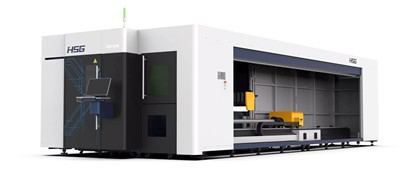
If you’re a shop owner or production manager who’s tired of slow production, high scrap rates, and missed deadlines, I encourage you to reach out to our team to talk more about how a VMC with the right ATC can help your business grow. We can walk you through our models, show you demo footage of ATCs in action, and help you spec a setup that fits your specific jobs and budget. The ATC isn’t just a part of the VMC—it’s the reason a VMC can keep up with the demands of modern manufacturing. Don’t let your shop get left behind by investing in a machine that’s missing this critical component.
Horizontal Machining Centers References
- Modern Machine Shop. (2022). "The Evolution of Automatic Tool Changers for CNC Machining." Cutting Tool Engineering, Vol. 74, No. 6, pp. 32-38.
- Tonti, P. (2021). "Lights-Out Machining: Efficiency Gains from Automated Tool Changes." Journal of Manufacturing Processes, Vol. 68, Part B, pp. 1127-1135.
- SMTA International. (2020). "Precision Tool Change Repeatability and Its Impact on Machining Quality." Proceedings of the 2020 SMTA International Conference, pp. 456-461.
- DeGarmo, E. P., Black, J. T., & Kohser, R. A. (2019). Materials and Processes in Manufacturing (13th ed.). John Wiley & Sons, Inc., pp. 789-795.
Hermens Industrial Co., Ltd.
As one of the most professional vertical machining centers enterprises in China, we’re featured by quality products and low price. Please rest assured to buy cheap vertical machining centers in stock here and get quotation from our factory. We also accept customized orders.
Address: 9/59 Moo 14, Rachathewa , Bang Phli , Samut Prakan Province 10540
E-mail: liu_jincheng@hzhemen.com
WebSite: https://www.hermensindustrial.com/
